
About Course
Course Overview
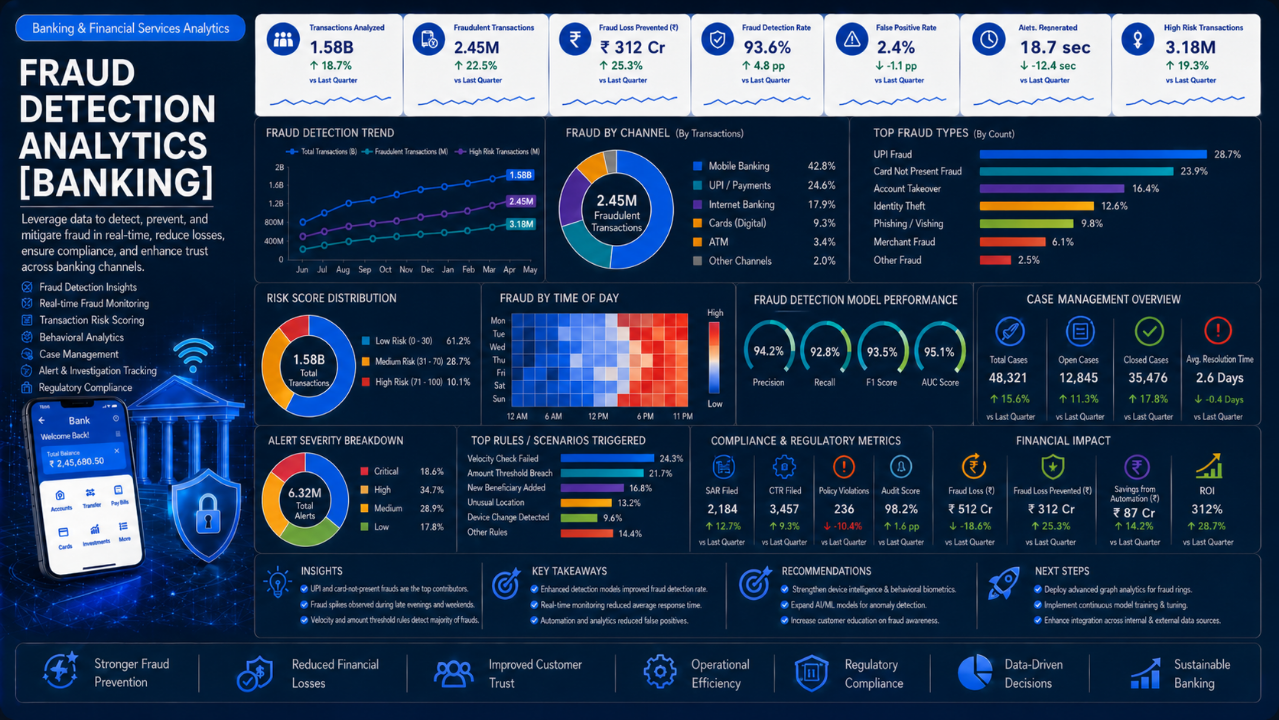
A practical, banking‑focused course that teaches learners how to use data, machine learning, and behavioural analytics to detect, prevent, and investigate financial fraud. The course covers transaction‑level analysis, anomaly detection, rule‑based and ML‑based fraud models, customer behaviour profiling, real‑time monitoring, alert optimisation, and regulatory considerations across retail, corporate, and digital banking environments.
Target Audience
-
Fraud detection, investigation, and risk management teams
-
Banking analysts, compliance officers, and financial crime units
-
Data analysts, BI developers, and decision‑support teams in financial services
-
Digital banking, payments, and cybersecurity professionals
-
Students or professionals entering fraud analytics or financial crime prevention
Course Outcomes
-
Understand fraud types, patterns, and risk indicators across banking channels
-
Analyse transaction data to identify anomalies, suspicious behaviour, and fraud signals
-
Apply rule‑based, statistical, and machine‑learning techniques for fraud detection
-
Build customer behaviour profiles and risk‑scoring models
-
Evaluate model performance using precision, recall, false‑positive rates, and alert quality
-
Use data to support investigations, case prioritisation, and fraud‑loss reduction
-
Build dashboards for fraud monitoring, alerts, and compliance reporting
-
Communicate fraud insights clearly to risk, compliance, and leadership teams
Earn a certificate
Add this certificate to your resume to demonstrate your skills & increase your chances of getting noticed.

Student Ratings & Reviews