
About Course
Course Overview
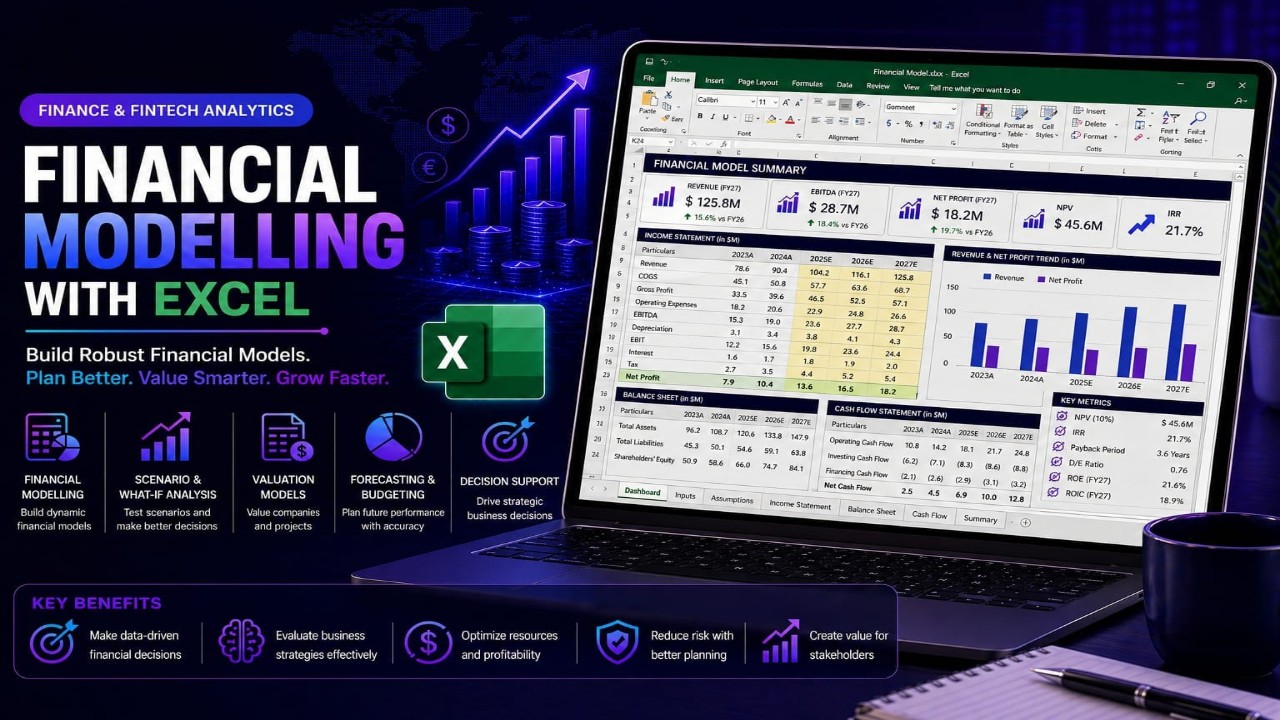
Financial Modelling with Excel introduces learners to the tools, techniques, and analytical frameworks used to build robust financial models for business decision‑making. The course covers core modelling principles, spreadsheet structuring, forecasting methods, scenario analysis, valuation techniques, and sensitivity testing. Learners develop the ability to translate business assumptions into dynamic, data‑driven models that support budgeting, investment analysis, performance evaluation, and strategic planning. The course emphasises accuracy, transparency, and best‑practice modelling standards used in finance, consulting, and corporate environments.
Target Audience
-
Finance professionals, analysts, and accountants
-
Business and data analysts working with financial data
-
Investment, corporate finance, and FP&A teams
-
Entrepreneurs and managers involved in budgeting or forecasting
-
Students and early‑career professionals entering finance or analytics roles
Course Outcomes
-
Understand the structure and purpose of financial models in business decision‑making
-
Build clean, transparent, and auditable Excel models using best‑practice design principles
-
Apply forecasting techniques such as growth drivers, trend analysis, and assumptions‑based modelling
-
Construct income statements, balance sheets, and cash‑flow models
-
Perform scenario and sensitivity analysis to evaluate business risks
-
Use Excel functions, formulas, and tools essential for financial modelling
-
Develop valuation models such as DCF and project feasibility assessments
-
Translate model outputs into insights for strategic and financial decisions
Earn a certificate
Add this certificate to your resume to demonstrate your skills & increase your chances of getting noticed.

Student Ratings & Reviews