
About Course
Course Overview
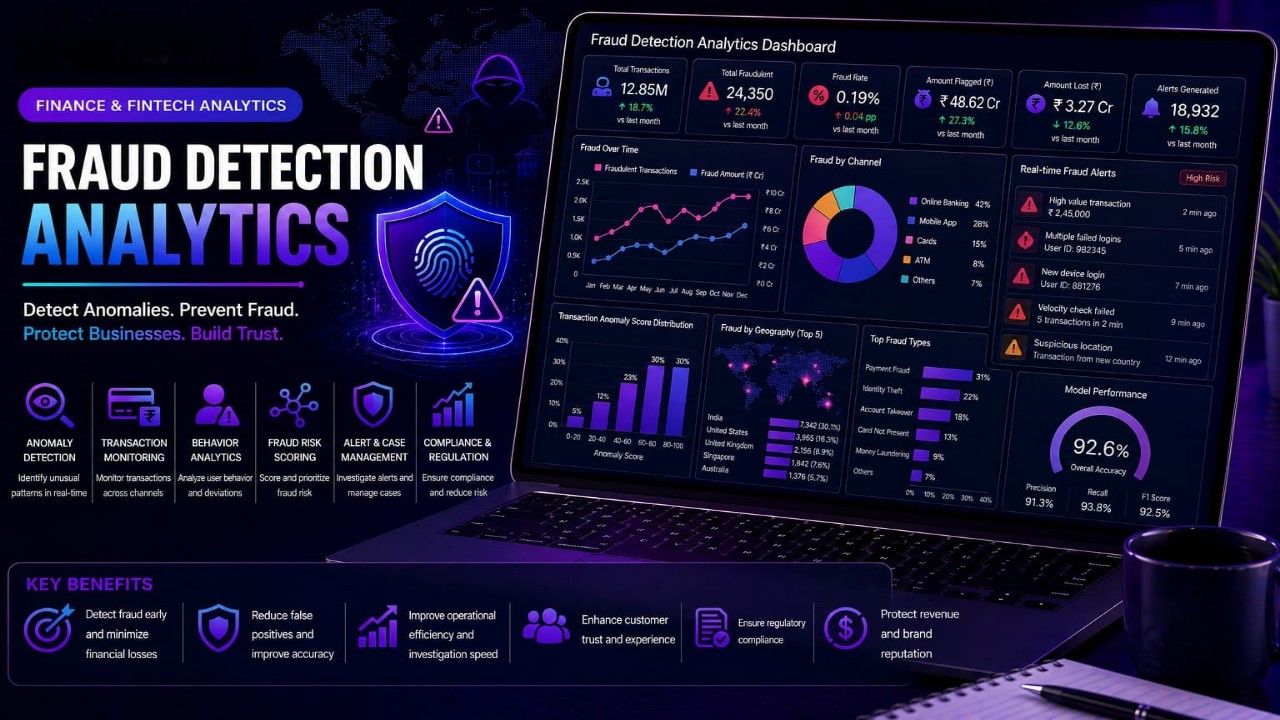
Fraud Detection Analytics introduces learners to the analytical techniques, statistical models, and machine‑learning methods used to identify, prevent, and monitor fraudulent activities across industries. The course covers fraud patterns, anomaly detection, risk scoring, supervised and unsupervised modelling, and real‑time monitoring systems. Learners explore how transactional data, behavioural signals, and business rules combine to detect fraud in banking, insurance, e‑commerce, and digital platforms. The course emphasises practical application, model interpretability, and the balance between fraud prevention and customer experience.
Target Audience
-
Fraud analysts and risk management professionals
-
Data analysts and data scientists working with transactional or behavioural data
-
Banking, fintech, insurance, and e‑commerce professionals
-
Compliance, audit, and internal control teams
-
Early‑career professionals entering analytics, risk, or cybersecurity roles
Course Outcomes
-
Understand common fraud types, patterns, and risk indicators across industries
-
Apply statistical and machine‑learning techniques for fraud detection
-
Use anomaly detection, clustering, and classification models to identify suspicious behaviour
-
Analyse transactional and behavioural data to build fraud‑risk profiles
-
Design rule‑based and hybrid fraud‑monitoring systems
-
Evaluate model performance using precision, recall, ROC curves, and cost‑based metrics
-
Implement real‑time detection strategies while minimising false positives
-
Translate analytical insights into fraud‑prevention actions and business controls
Earn a certificate
Add this certificate to your resume to demonstrate your skills & increase your chances of getting noticed.

Student Ratings & Reviews